Episode Transcript
[00:00:01] Speaker A: Yeah.
The third degree Ned podcast.
Third degree. The third degree net podcast.
Third degree. The third Degree net podcast.
Third degree.
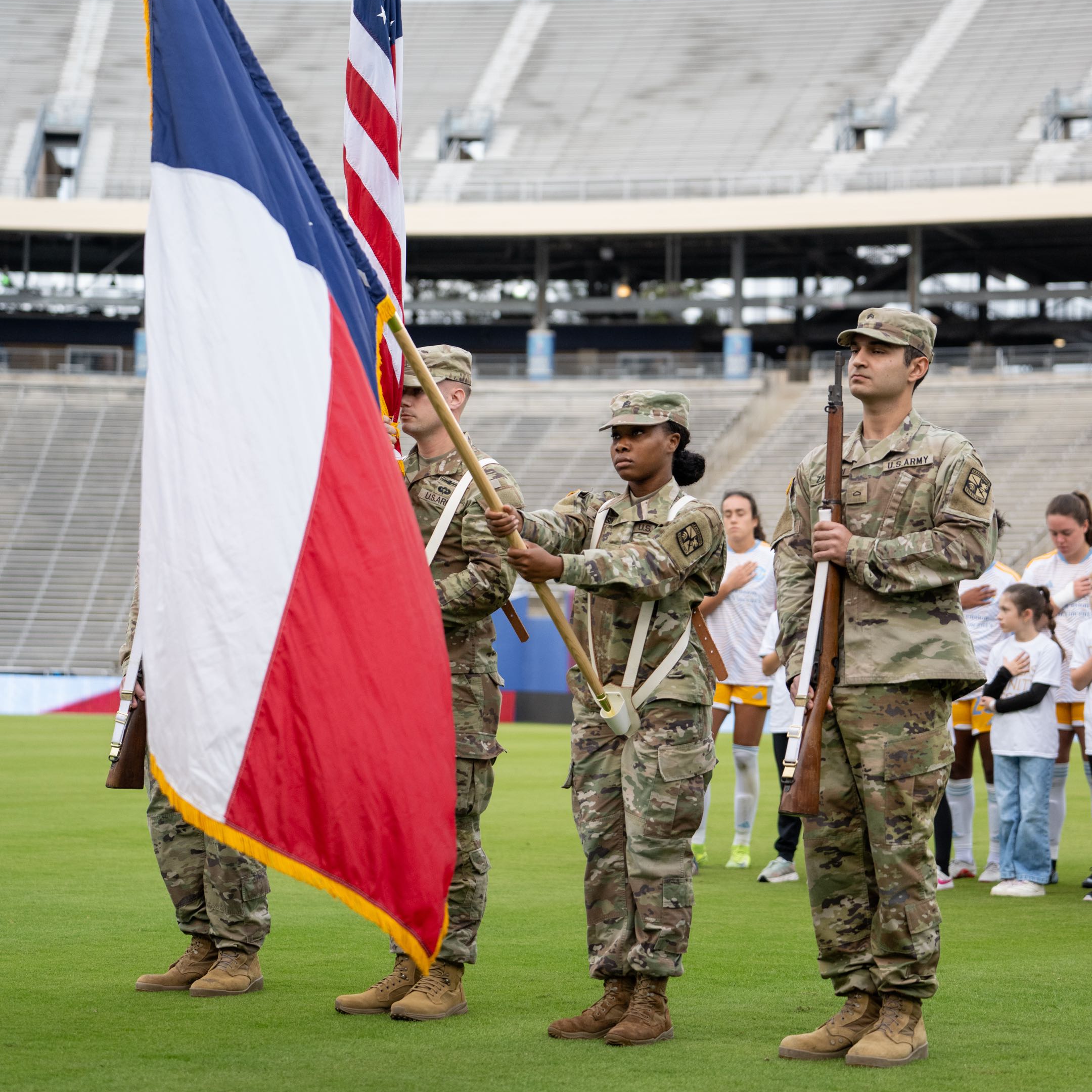
[00:00:26] Speaker B: Good afternoon, Dallas Trinity fans and DFW soccer. Curious. I am Dennis McGowan, co host of third degree, the podcast. And this very special bonus episode today is being run here in video format as well on the Dallas Trinity YouTube channel. We are here today for Trinity's Salute to Service night as the club gets ready to host Sporting Jacks in the penultimate home match of the 2026 fall season. I am here with some incredible guests today. We've got Charlie Neal, founder and president of Dallas Trinity fc. And we've got Gus Kabarcus, a United States army veteran, retired NYPD sergeant, and now works with veterans here in North Texas. Gentlemen, thank you for taking the time and hanging out with us today.
[00:01:04] Speaker C: Thanks for having us, Dennis.
[00:01:05] Speaker D: Thanks for having us.
[00:01:07] Speaker B: So, Charlie, before we get into the season and what goes on here, why does the club make a night like this part of the schedule? And how does this connection carry through the rest of the year?
[00:01:16] Speaker C: Yeah, it's a great question. I mean, I'd be remiss to say you meet people like us and it's an easy decision. But I think there's two core principles that our club abides by. And it's two words I live and breathe by. And I hope the club continues to represent, which is unite and inspire. And certainly we feel like being the women's professional soccer team here in town. Our players are providing that inspiration on the field. But what about our heroes, the people that keep us safe, the people that afford us the opportunity to do these things? Those folks are inspirations. And so finding a way to combine those two things, it's a no brainer from the club's perspective. And so we're excited to celebrate our veterans, our current enlisted and their families.
[00:01:56] Speaker B: Excellent.
Gus, you were originally born in Columbia. Soccer is a big part of life there. Did you play and all there?
[00:02:02] Speaker D: Oh, yes. I grew up playing soccer.
Well, call it football there, but yeah, grew up, you know, playing football and then came to the United states back in 1977 and continued that, played in high school.
And then like I said, I have a family member that's also big soccer players. I mean, I keep saying soccer, but football, you know,
[00:02:26] Speaker B: we're interchangeable here. It's not one or the other. Totally fine.
So you went from the army to the NYPD to helping veterans here in North Texas. What's something that carried over between all those missions?
[00:02:39] Speaker D: Well, you know, giving back.
I believe in you know, listen, this, this country offered me a great opportunity for my parents, myself, and that was a way for me to just to give back to this great country, you know, as an immigrant, join them, you know, join the, join the army at 17 and wore that uniform for several years that transferred to the New York City Police Department. And then once I left that uniform, you know, just giving back to the veterans, their families been doing that here in North Texas since 2012, since I got here, and just connecting with the resources. You know, a lot of veterans, once they get out of that uniform, they don't know about all the resources they're available to them and their families.
So it's just giving back.
[00:03:28] Speaker B: Can you talk a little bit more about that mission and what you, what you guys are actually able to do for veterans when they
[00:03:32] Speaker D: come home? You know, connect them with, with the resources. So from, hey, how to gain access to their VA benefits, what other resources are available for them? You know, it could be from home repairs to just they want to go back to school looking for employment. So we have all that network, you know, instead of them going around looking for it, it's all one stop shop. So that's what I've done. You know, I recently switched jobs, but, you know, now I'm in a different.
Working with, working for a school district and dealing with kids now, you know, from K through 5th grade. But it's, it's rewarding, you know, keeps me young.
[00:04:18] Speaker B: As a sergeant, you had officers counting on you. What does being physically ready have to do with earning their trust?
[00:04:26] Speaker D: It's the way you treat people. You know, you treat people the way you want to be treated yourself.
You know, I never, to me, rank was never a big deal for me, so I started at the bottom, you know, moved my way up and then. But I always treated people the way I want to be treated. You know, I treated my officers. I would never ask someone to do something that I wouldn't like to do myself.
So that's. And I carry that to this day. You know, I mean, I treat people the way I want to be treated. You know, I don't look at, you know, if I don't care if you're the CEO of a company or I talk to you the same way I would talk to the janitor that clean this, you know, stake. That's just the way I am
[00:05:12] Speaker B: working with young people.
What role does sports play? Either playing it or watching it, being involved in it. And somehow how does that affect those, those young people you work with and those veterans you've worked with that have come home.
[00:05:23] Speaker D: So lately I've been, you know, a lot of these young kids now, they all imitate Ronaldo, you know, even if they don't score a goal, you see them jumping up and doing that. I mean, I try to do that at my age.
I don't want to do that because I might, you know, pull something, but.
And then you see the kids coming into school with, like, all these different team shirts.
[00:05:44] Speaker C: Yeah.
[00:05:44] Speaker D: You know, like, Messi Ronaldo, you know, and then I'll get into a conversation with them. Well, he's the goat. No, this one's the goat. And I'm like, okay, you know, you try. I mean, these are like, you know, second greatest, third greatest, but. And you can see how soccer now, especially at the school that I'm at, you know, the kids are just. They know all the players. Where, when I was growing up, you know, soccer wasn't that popular here, but now it's just growing, and I think through the Dallas Trinity Football Club, you know, the athletic Dallas, that's going to grow here, you know, so it's just getting the word out.
And the young generation, you know, it's definitely going to take off.
[00:06:29] Speaker B: Awesome.
The Golden Girls take the field in about an hour. People are going to be counting on them. What does an athlete's pressure have in common with the soldiers or an officer's?
[00:06:40] Speaker D: Charlie,
[00:06:42] Speaker C: I've never been a soldier or an officer, but I'm a former athlete. I think, if anything, it prepares you in life.
I think life does not come with. Without its wealth of pressures, whether personally or professionally. And I think being an athlete, as long as I think what I've found that the most successful athletes have a routine. They have a very clear vision, a very clear goal, and then they've got an inner confidence in themselves to accomplish all those things. And I think those are qualities that are transferable whether you're on the field or you're in the field. Right.
And, yeah, I think preparation is key. I think that our players would attest to that. You know, I'm sure our head coach would attest to that. You know, training, practice is incredibly important to really cultivate that, then confidence on game day, where game day comes, you're treating it the same way you did. You trained every day, each and every day. So it's not anything different. And I think that's the same. Like I said to life, if you're putting in effort each and every day, not treating one day less important than the next, then you Know, as things and challenges and adversity comes, you'll be prepared to handle it.
[00:07:55] Speaker D: I, you know, couldn't say any better. It's just the team building.
You know, you work as a team, whether you lose as a team, whether you win as a team at the end of the day is to accomplish that mission of, like I said, for soccer, winning that game.
But, you know, and it teaches you for life later on, you know, not everything, it's, it's a winning, but you also got to learn how to lose and it makes you a better person, you know, So, I mean, that's. It prepares you for life, I think.
[00:08:27] Speaker B: Well said.
Charlie. You built North Texas first professional women's soccer club. Gus, you work with young children. What does it take to keep a young athlete, especially a young girl, in the game today? Whether that's soccer or service or being involved in their community?
[00:08:43] Speaker C: I'll take that. Environment's key.
You know, we were fortunate enough to visit Nike about a year or so back, and one of the things that their foundation talked to us about was there's actually been a lot of success in the last decade or so from participation standpoint of getting young girls participating in soccer. What they found is retainment. You know, keeping them in the sport falls off, especially in those tween years before high school. And, you know, you can interpret that in a variety different ways, but I really think about that as environment. Are they getting coaching that they deserve? Are they getting the support they deserve, the teaching so they can develop? Are they getting to play at facilities that are up to the caliber that they deserve? Because nobody wants to go out and play soccer and get hurt because they're tripping over rocks or whatever it may be.
And so from, from our perspective, what can Trinity do to control?
We've got some amazing soccer minds, both our players, but our staff, and how do we get them integrated in the community so that knowledge is transferring down so that, you know, when a young girl, 7, 8 is playing soccer, you know, they've, whoever they're getting trained from has gotten a little bit of taste of how the pros do it. And that knowledge can then transfer to those young kids and they can feel confident and good about what they're doing. Hopefully the long term dividends of that will start to, to show,
[00:10:02] Speaker D: you know, it like Charlie said, just to add on to that, you know, they, they look at these role models, see, you know, a lot of the young kids now, they, they want to emulate and they want to imitate these role models that so by them seeing like, you know, women playing soccer or men, you know, it just gives them a motivation. Just keep going. And then they know that this, if they work hard at it, eventually it's going to pay off.
[00:10:32] Speaker B: Charlie, what do you look for in a leader locker room, front office, when you're bringing in somebody to lead?
What traits do you look for and how does that carry over to some of the experience Gus has
[00:10:41] Speaker C: talked about?
It's really, I mean, Gus nailed it. It's someone willing to do, you know, willing to do whatever they're going to ask someone else to do and, you know, putting ego to the side, you know, not being too big for any challenge problem, being solution oriented, but someone who has an ability to really rally the people beside them. And that comes from trust. And trust, I think, comes from exposure to that person or that person proving, demonstrating to the other people. They're willing to do all the little things the right way. They're never sacrificing their north, you know, their compass, whatever their north Star is, who they are as a person. They're staying very true to that. And I think people gravitate to those sorts of people because they can feel that security, they can feel that reliability. And especially on, you know, soccer pitch, you know, 11 people out there, you gotta. You gotta feel like when you're positioning yourself or you're playing a pass to someone that you can trust that they're gonna make the right decision.
So we look for leaders that, yeah, I think demonstrate both obviously high ability and skill set. Because two, you got to be a good player. It's hard to lead if you can't get yourself on the field, but then that willingness to get with their teammates, build that trust and lead in that manner.
[00:12:01] Speaker B: So Trinity reached the semifinals in both of the league's first two seasons. We've got four games left to play before the season is just about up pretty much a playoff spot on the line every week from here on out.
What is getting there a third time into the playoffs and potentially into a final mean to you?
[00:12:18] Speaker C: I mean, just one game at a time. One game at a time. But I mean, I'm kind of joking about it, but I'm kind of not because it's, you know, get you. I get a chance to kind of catch up with some of the players after a lot of these matches and it's. It's really easy to start looking ahead to what the teams are doing in front of you. But I trust our players. They're taking it one match at a Time, one half at a time. Time, one play at a time.
But it's, you know, from the club's perspective, the business perspective, it's hard to ignore the excitement that that could bring if our players keep. Keep putting themselves in a good position in the table.
Last two years we've had win or go home matches at home, and the energy of those crowds has been unmatched. And so I'd love to see ourselves not in that position and secure something beforehand and maybe even go on a run here. So we're hosting a playoff game because I think Dallas is deserving of seeing a playoff game. We haven't had got to see it on Peacock the last two years, but in person. It would be so special to have a crowd come out to the Cotton bowl early December, see if we can make a run and hopefully bring home a trophy.
[00:13:19] Speaker B: So like I said, we're about an hour from kickoff now. Let's fast forward, give you a scenario. About two, two and a half hours from now. We're in the 85th minute, girls are out there, the legs are gone. Let's say we're level. You've got 30 seconds to coach them up. What advice are you giving them? Gosh, you go first.
[00:13:34] Speaker A: Yeah.
[00:13:35] Speaker D: Just stay positive and, you know, try to reach that. Obviously score to goal, but, you know, work as a team and just achieve that. You know what you're working for.
And obviously good luck today. Let's bring the win home.
[00:13:55] Speaker C: I say trust yourself.
You know, the last thing you know, I speak in person. As a player that I wanted to do was finish the game. It felt like I had more in the tank. I felt like there was more I could have given.
I think if our players really dig in and take that mentality of putting it, leaving it all out on the field, we've got a talented group and I'm gonna bet on that more, more often than not to end out on top.
[00:14:18] Speaker B: Awesome. Well, gentlemen, thank you very much for taking some time this afternoon. Looking forward to getting out there and watching this one. And tickets for the final match. Charlie, what's linked to.
[00:14:27] Speaker C: They're already on sale. Dallas Trinity fc.com It's hard to miss it.
[00:14:31] Speaker B: Excellent.
[00:14:32] Speaker A: 3rd degree the 3rd degree n podcast. 3rd degree the 3rd Degree n podcast. 3rd degree the third degree n podcast. 3rd degree, the third degree n podcast.
Sam.